12 Common Crochet Mistakes Beginners Make (and How to Fix Them)
Why is your crochet getting wider, curling or twisting? Fix the 12 most common beginner crochet mistakes, from uneven edges to tight tension and twisted chains.
By Ayoub Farid · · 4 min read
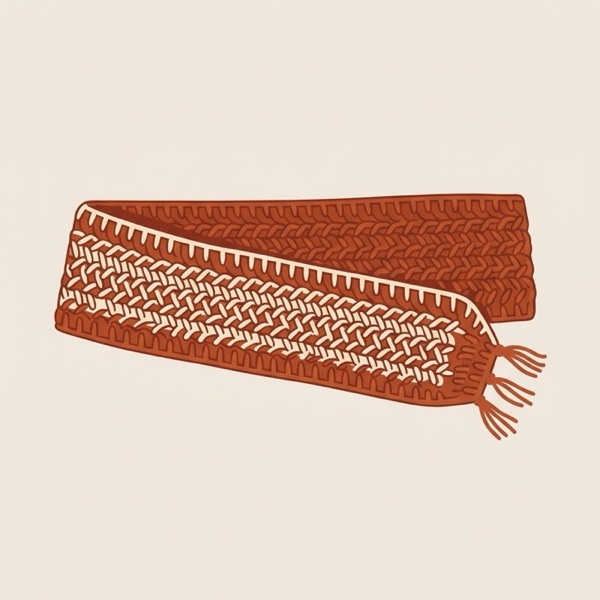
Every crocheter has made a scarf shaped like a trapezoid. Mistakes are part of learning, and the good news is that crochet mistakes are easy to undo: pull the hook out, tug the yarn, and the stitches unravel back to where things went wrong. (Crocheters call this "frogging", because you "rip it, rip it".)
Here are the 12 mistakes we see most often, what causes them and how to fix them.
1. Your work is getting wider (or narrower)
Cause: you're adding or losing stitches at the edges. Usually you're working into the turning chain (adds one), or skipping the last stitch of the row (loses one). The last stitch is easy to miss because it's small and sits right next to the turning chain.
Fix: count your stitches at the end of every row. Put a stitch marker in the first and last stitch of each row so you can see exactly where to work.
2. Wavy, wobbly edges
Cause: inconsistent turning chains. A turning chain that's too tight pulls the edge in; one that's too loose leaves a loop.
Fix: follow the pattern on whether the turning chain counts as a stitch. For single crochet, chain 1 and don't count it. For double crochet, chain 3 and work the last stitch into the top of the previous turning chain.
3. Tension too tight
Cause: gripping the yarn hard. The hook won't slide into stitches, your hand cramps, and the fabric is stiff.
Fix: relax your yarn hand and let the yarn feed more freely. Make loops on the hook's shaft, not its narrow throat. Or go up a hook size.
4. Tension too loose or uneven
Cause: inconsistent yarn feed, often from switching how you hold the yarn mid-row.
Fix: pick one way to wrap the yarn around your fingers and stick with it. Evenness comes with practice: a few dozen rows of plain single crochet does wonders.
5. Foundation chain too tight
Cause: beginners often chain tightly, so the bottom edge puckers and is narrower than the rest.
Fix: make the foundation chain with a hook one or two sizes larger, then switch back. Or use foundation single crochet (fsc).
6. Working into the wrong loops
Cause: inserting the hook under only one loop at the top of a stitch, when the pattern means both. The fabric gets unintended ridges.
Fix: unless the pattern says FLO or BLO, insert the hook under both loops (the sideways V at the top of each stitch). See our abbreviations chart.
7. Twisted foundation chain when joining in the round
Cause: joining a long chain into a ring when it's twisted, so the whole tube has a twist you can't undo.
Fix: before joining, lay the chain flat with all the Vs facing the same direction.
8. Granny squares that twist or cup
Cause: twisting usually happens when you turn between rounds when you shouldn't, or miss chains between clusters. Cupping (bowl shape) means too few stitches; ruffling means too many.
Fix: follow the round instructions exactly and count clusters on every side. See how to crochet a granny square.
9. Mixing up US and UK terms
Cause: following a UK pattern with US stitches. Everything comes out one stitch-height too tall.
Fix: check the pattern's terms before you start. See US vs UK crochet terms.
10. Holes in amigurumi
Cause: hook too big for the yarn, so stuffing shows between stitches.
Fix: go down one or two hook sizes from the yarn label's recommendation, and use the invisible decrease. More in amigurumi for beginners.
11. Skipping the gauge swatch
Cause: impatience (we've all done it). Fine for a scarf, painful for a hat that won't fit.
Fix: for anything that needs to fit, crochet a 15 cm square first and measure. See crochet gauge explained.
12. Choosing difficult yarn for a first project
Cause: fluffy, dark, splitty or novelty yarn hides your stitches, so you can't see where to insert the hook or count.
Fix: use a smooth, light-colored worsted weight yarn while you learn. See our beginner's guide.
How to fix a mistake several rows back
- Mark the row where the mistake is.
- Pull the hook out and gently unravel until you're one row past the mistake.
- Carefully unravel stitch by stitch, back to the stitch before the mistake.
- Put the live loop back on the hook, making sure it isn't twisted, and continue.
If the mistake is tiny and in a forgiving project (a blanket, a scarf), it's fine to leave it. Handmade has character.
Get help in the moment
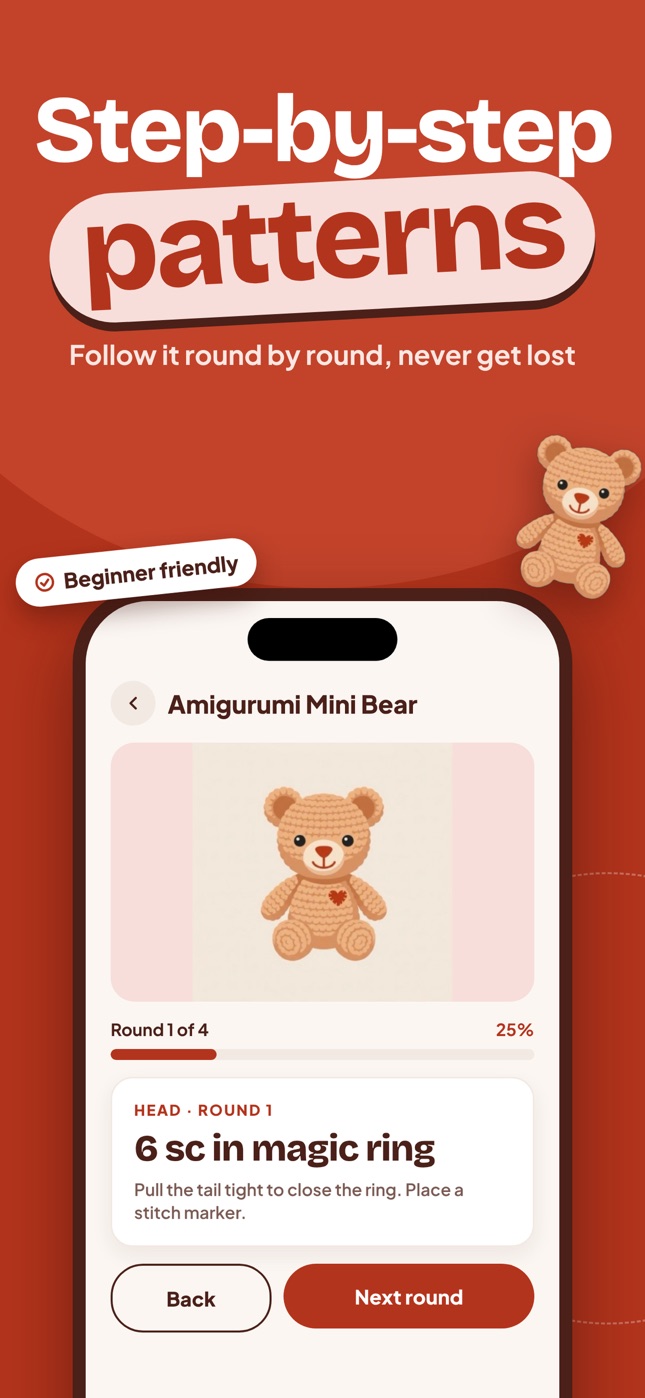
HookWise patterns show the stitch count for each round and save your progress, so you always know where you are. If something looks wrong, ask the AI helper and describe it: "my row 6 has 21 stitches instead of 20". It will help you find where the extra stitch came from.
Frequently asked questions
Why is my crochet getting wider?
You're adding stitches, usually by working into the turning chain or working twice into the first stitch. Count stitches every row and mark the first and last stitch.
Why is my crochet curling?
Tight tension or a foundation chain that's tighter than the rest. Loosen up, use a bigger hook for the chain, and block the finished piece.
How do I undo crochet stitches?
Remove the hook and gently pull the working yarn. Stitches unravel easily. Stop one stitch before the mistake and put the loop back on your hook.
Is it normal for my first projects to look uneven?
Completely. Tension evens out with practice. Most beginners see a big difference after their first few projects.
Crochet with a coach in your pocket
Learn to crochet with HookWise
94 step-by-step patterns that save your place, AI stitch & yarn identification from one photo, and an AI helper for when you get stuck. Free to download on iPhone.
Free on iPhoneDownload on the App Store